

Your bedroom should feel comfortable, look beautiful, and make everyday life a little easier. But how do you decorate a bedroom when you’re working with a small space, a limited budget, or furniture that doesn’t quite match?
Whether you’re refreshing your main bedroom, decorating a guest room, or giving a small bedroom a makeover, these seven practical ideas will help you create a space that feels cozy, organized, and personal. You’ll also learn what to prioritize, how to avoid common decorating mistakes, and where to spend your money for the biggest visual impact.
1. Choose a Bedroom Color Scheme Before Buying Anything
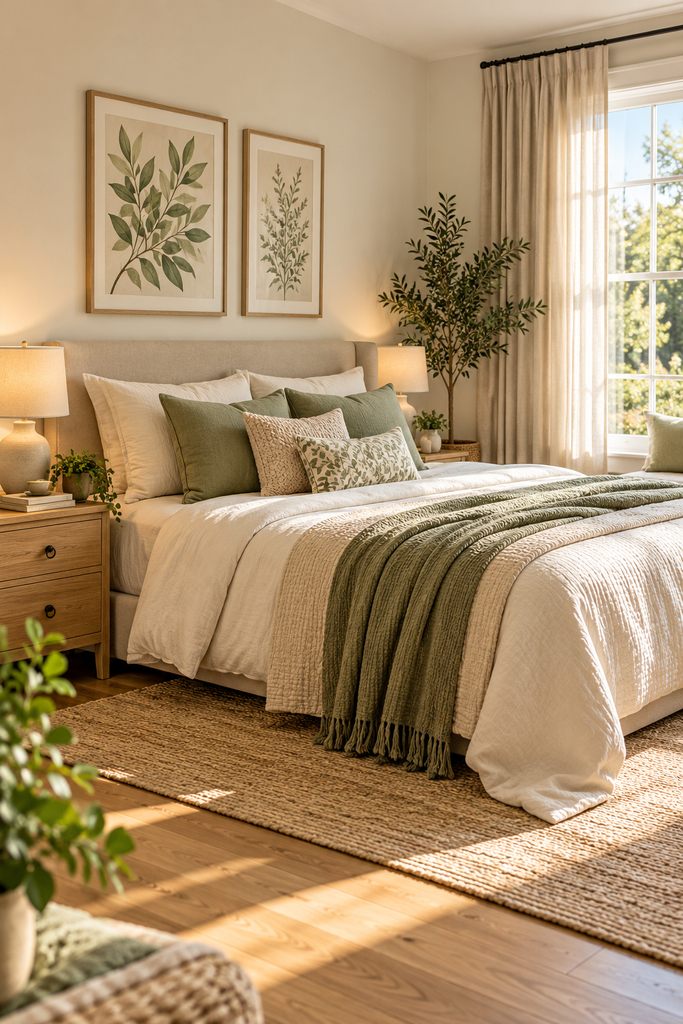
One of the easiest ways to make a bedroom look professionally styled is to choose a color palette before shopping for accessories. When your walls, bedding, curtains, and furniture complement one another, the entire room feels more cohesive.
You don’t need to match every item perfectly. Instead, choose two or three main colors and repeat them throughout the room.
Which colors work best in a bedroom?
Your ideal color scheme depends on the atmosphere you want to create.
- Warm white, beige, and cream: Create a soft, timeless look that suits most bedroom sizes.
- Sage green, ivory, and natural wood: Bring a fresh, nature-inspired feel to your space.
- Blush pink, white, and muted gold: Add warmth and a gentle, romantic touch.
- Navy blue, soft gray, and white: Create a more structured, contemporary appearance.
- Terracotta, olive green, and sand: Work beautifully in earthy, boho-inspired bedrooms.
If you have a small bedroom, light colors can help reflect daylight and create an airy appearance. However, you don’t need to avoid dark colors entirely. A deep green or navy accent wall can add depth and character when you balance it with lighter bedding and suitable lighting.
How to create a coordinated color palette
Follow these simple steps:
- Choose one dominant color for your walls or large surfaces.
- Select a secondary color for your bedding, curtains, or upholstered furniture.
- Add an accent color through cushions, artwork, lamps, or decorative accessories.
- Repeat each color at least twice to create a visual connection between different areas.
Practical tip: If you already own a duvet cover, rug, or artwork you love, use it as your starting point. Pull two or three colors from that item instead of replacing everything.
Before painting, test a sample on your wall and observe it in morning and evening light. Colors can look surprisingly different depending on your room’s natural lighting.
2. Make Your Bed the Main Focal Point
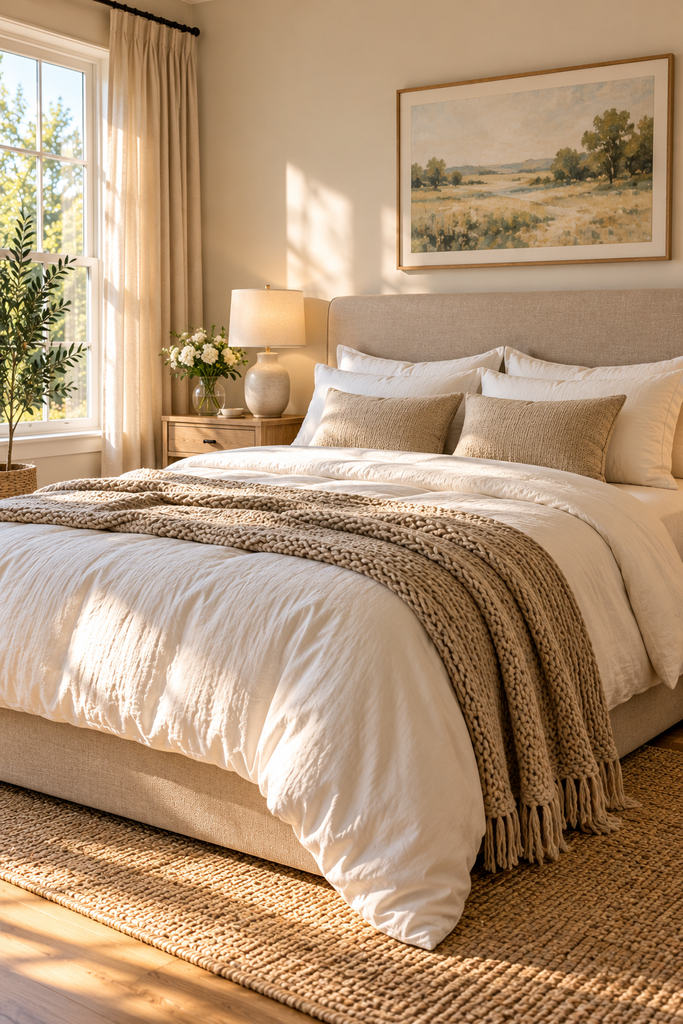
Your bed usually occupies the largest area of the bedroom, so improving its appearance can change the entire room without requiring a major makeover.
The good news? You don’t need expensive designer bedding to create a polished look. A few well-chosen layers and a consistent color scheme can do the job.
How to style your bed beautifully
Start with comfortable sheets, then add a duvet or comforter in a color that complements your room.
Next, arrange your pillows and finish with a textured throw blanket across the foot of the bed.
For a simple, hotel-inspired arrangement, use:
- One fitted sheet and a matching or complementary pillowcase set.
- One duvet cover or comforter in a neutral or coordinating color.
- Two sleeping pillows per person, if that suits your needs.
- Two or three decorative cushions, depending on your bed size.
- One throw blanket for extra texture and warmth.
You don’t need every item on this list. If you prefer a minimalist bedroom, neatly arranged bedding and two comfortable pillows can look just as attractive.
Mix textures instead of adding too many patterns
If your bedroom feels flat, introduce different fabrics rather than buying lots of colorful accessories.
For example, combine smooth cotton sheets with a linen-look duvet cover and a chunky knitted throw. The different textures add visual interest while keeping the overall appearance calm.
Choose a headboard that complements your style, too. Upholstered designs create a soft appearance, wooden headboards bring warmth, and rattan options suit relaxed, natural interiors.
Budget-friendly idea: If your bed frame still works well, keep it and invest in fresh bedding instead. A new duvet cover and coordinated pillowcases can refresh the room for much less than buying a completely new bed.
3. Use the Right Lighting for a Cozy Bedroom
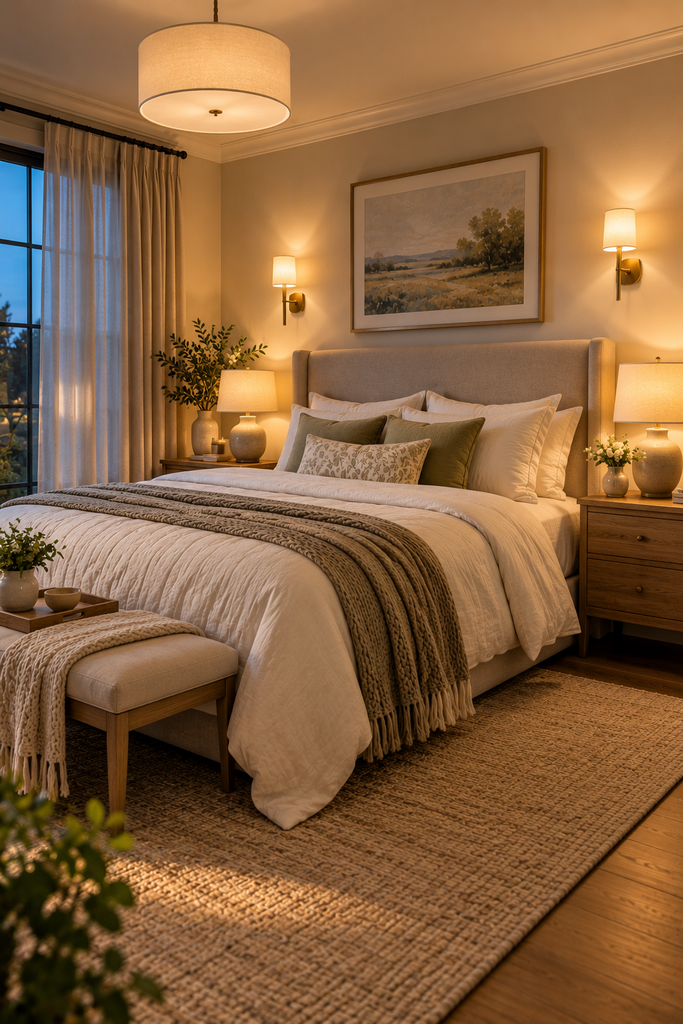
Lighting affects how your bedroom looks and how comfortably you can use it throughout the day. A single bright ceiling light may help you clean or get dressed, but it rarely creates the cozy atmosphere you want for relaxing in the evening.
The solution is to combine general lighting with smaller lights for specific activities.
Use three types of bedroom lighting
Ambient lighting provides overall illumination. A ceiling fixture or flush-mounted light works well for everyday tasks.
Task lighting helps you read, work, or get ready. Bedside lamps and adjustable wall lights offer convenient illumination without lighting the entire room.
Accent lighting creates atmosphere. Small table lamps, decorative lights, or subtle LED lighting can highlight selected areas.
You don’t need to install all three types at once. Start by adding bedside lamps if your room currently relies on a ceiling light alone.
Which light bulbs should you choose?
For a warm, relaxing bedroom, look for bulbs around 2700K to 3000K. These bulbs produce a warm white glow that generally feels softer than cool, bluish lighting.
Choose brighter lighting near your wardrobe or dressing mirror if you need to see colors clearly when choosing clothes. Use softer, dimmable lighting near the bed for your evening routine.
Also consider where you place your lights. Position bedside lamps so they illuminate your book or bedside table without shining directly into your eyes.
Common mistake to avoid: Don’t rely entirely on decorative fairy lights. They may look attractive, but they often provide insufficient illumination for everyday tasks.
4. Decorate Bedroom Walls Without Making Them Look Cluttered
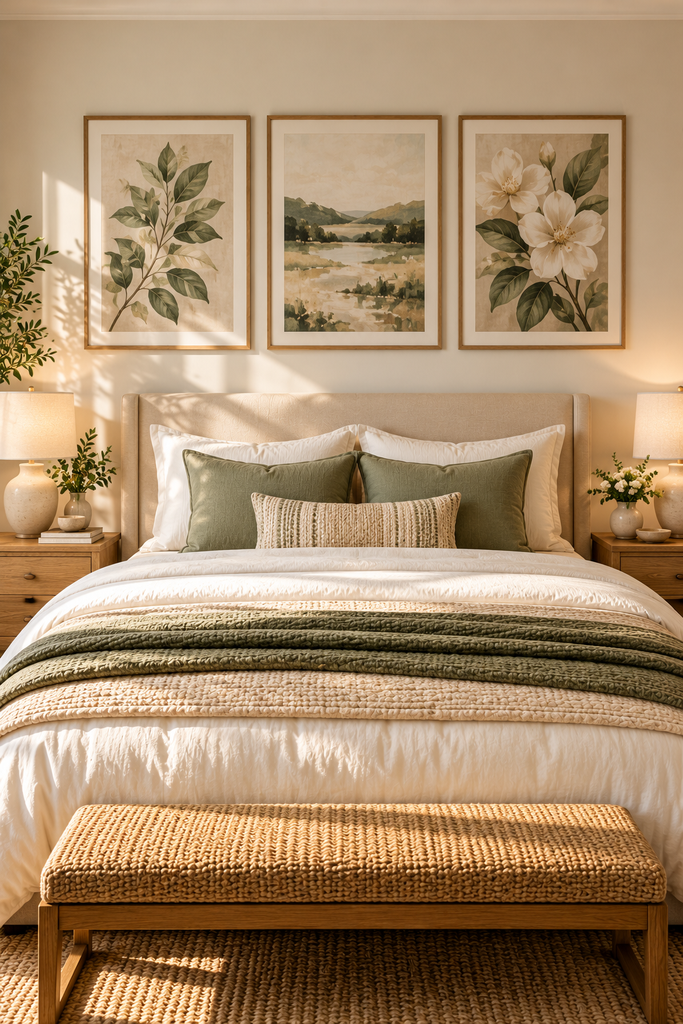
Bare walls can make a bedroom feel unfinished, but covering every wall with artwork and shelves can make the space feel busy.
Instead, choose one main feature and let the surrounding areas breathe.
Hang artwork above the bed
A large framed print, a pair of coordinated pictures, or a small gallery wall can create an attractive focal point.
For a balanced arrangement, choose artwork approximately two-thirds the width of your headboard as a starting point. Position it at a comfortable viewing height and leave enough space between the artwork and the headboard.
Consider these styles:
- Botanical prints for a natural, relaxed bedroom.
- Abstract artwork for a modern interior.
- Landscape photography for a calm, outdoors-inspired look.
- Framed personal photographs for a more individual touch.
- Minimalist line drawings for a simple, understated space.
Choose frames that complement your furniture. Black frames add contrast, light wood creates warmth, and white frames suit a soft, airy palette.
Should you paint an accent wall or use wallpaper?
An accent wall behind the bed can add personality without overwhelming the room.
Paint offers a relatively straightforward way to introduce color, while wallpaper allows you to incorporate patterns, florals, or texture.
If you’re renting, check your lease before making permanent changes. Removable wallpaper may offer a practical alternative, provided your wall surface suits the product.
Useful tip: If you choose a bold wall pattern, keep your bedding and curtains relatively simple. If you prefer plain walls, introduce interest through textured bedding or more expressive artwork.
This balance helps your bedroom feel thoughtfully decorated rather than visually crowded.
5. Choose Curtains and Rugs That Fit Your Room

Curtains and rugs do more than complete your decor. They soften hard surfaces, introduce texture, and help connect the different colors in your bedroom.
However, the wrong size can make even expensive accessories look awkward.
How to choose bedroom curtains
Floor-length curtains often create an elegant appearance and can make windows feel taller.
Before shopping, measure the width of your curtain rod or track and the distance from the track to your desired curtain length. Allow enough fabric for the curtains to gather naturally instead of hanging flat.
Choose your curtains according to your needs:
- Sheer curtains: Let daylight filter into the room while providing some daytime privacy, depending on the lighting and view.
- Blackout curtains: Help block incoming light, although performance varies by fabric and installation.
- Linen-look curtains: Create a relaxed, natural appearance.
- Velvet curtains: Add weight, richness, and texture.
If you want both privacy and daylight, combine sheer curtains with heavier outer curtains.
How to select the right bedroom rug
A rug can make getting out of bed more comfortable and visually anchor the bed within the room.
For a larger bedroom, consider a rug that extends beyond the sides and foot of the bed. In a smaller bedroom, two bedside rugs or a smaller rug near the foot of the bed may work better.
Before purchasing, measure your available floor space and check how the rug will interact with doors, drawers, and walking paths.
Material matters, too. Wool feels comfortable and offers durability, cotton suits casual spaces, and synthetic fibers often provide affordable options.
Practical tip: If you have pets or frequently spill drinks, prioritize easy cleaning over appearance alone. Check the manufacturer’s care instructions before buying.
6. Make a Small Bedroom Feel More Spacious
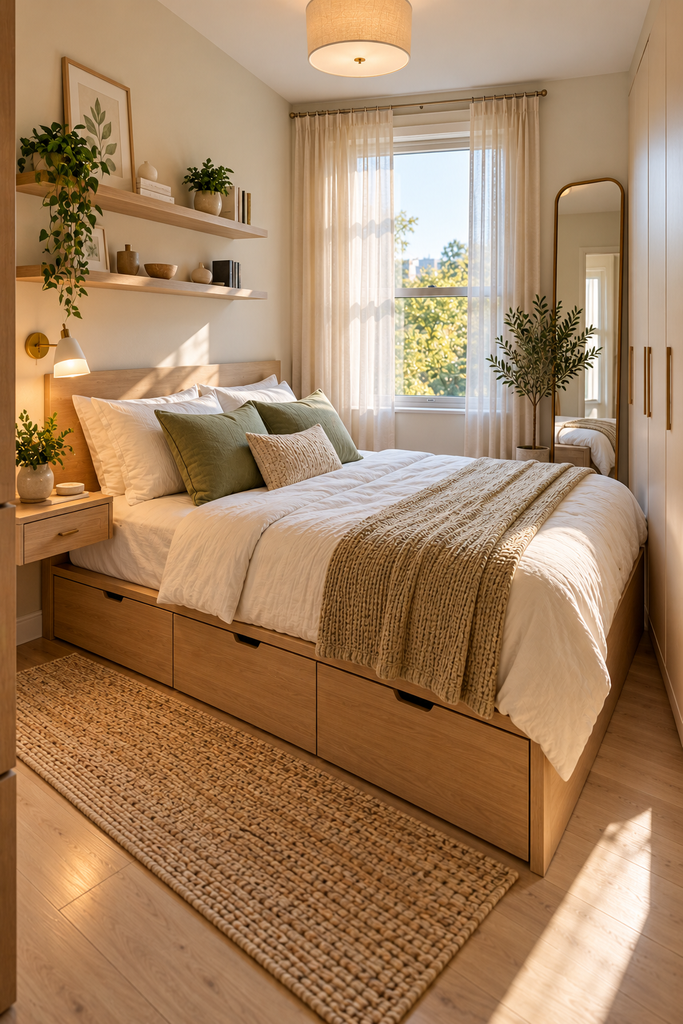
A small bedroom doesn’t need less personality. It simply needs a layout that makes better use of the available space.
The biggest mistake people make is buying furniture before measuring the room. An oversized bed or bulky nightstand can leave very little room to move around.
Choose furniture with built-in storage
Multifunctional furniture helps you reduce clutter without sacrificing useful storage.
Consider these options:
- Storage beds: Keep spare sheets, blankets, and seasonal clothing out of sight.
- Floating nightstands: Free up floor space and create a lighter visual appearance.
- Wall-mounted shelves: Provide space for books and small decorative items.
- Storage ottomans: Offer seating and a place to store accessories.
- Tall, narrow dressers: Use vertical space instead of occupying a large section of the floor.
Before purchasing furniture, measure the bed, wardrobe, doorways, and available walking paths. Make sure you can open drawers comfortably and access your closet without moving other items.
Use mirrors and vertical space wisely
A mirror placed near a window can reflect natural daylight and make the room feel brighter. A full-length mirror also provides a useful dressing area without requiring a large piece of furniture.
Use vertical space for storage and decoration. Wall shelves, tall bookcases, and appropriately placed hooks can help you organize belongings without filling every corner.
However, don’t cover every wall with shelves. Leave some empty space so the room doesn’t feel crowded.
Keep only what you use or love
Decluttering can make a surprisingly large difference.
Start with your bedside table, dresser, and wardrobe. Remove items you no longer use, group similar belongings together, and give everyday essentials a convenient home.
You don’t need to become a minimalist overnight. The goal is to make your bedroom easier to navigate and maintain.
7. Add Plants and Personal Touches That Make the Room Yours
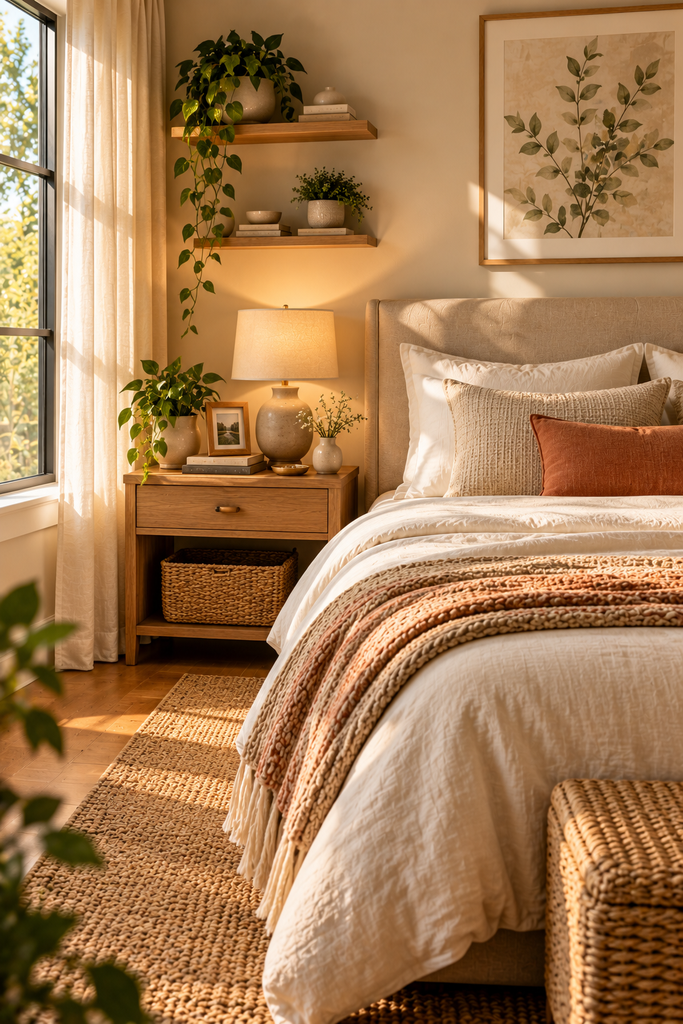
Once you’ve arranged the furniture and established your color scheme, finish your bedroom with a few accessories that reflect your personality.
This final step often makes the difference between a room that looks attractive and one that feels genuinely welcoming.
Bring in plants and natural materials
Plants add color and organic shapes to a bedroom. If your room receives suitable indirect light, a pothos or snake plant may work well, depending on your care preferences and growing conditions.
Choose the plant according to the light your room actually receives. A beautiful plant won’t stay beautiful for long if its growing requirements don’t match your space.
If live plants aren’t practical, artificial greenery can provide a similar decorative effect without regular watering.
You can also introduce natural materials through woven baskets, wooden trays, ceramic vases, and textured lampshades.
Style your bedside table without cluttering it
A bedside table should support your routine, not become a collection point for everything you own.
Try this simple arrangement:
- Place a lamp toward the back of the table.
- Add a small tray for jewelry, glasses, or other essentials.
- Include one decorative object, such as a vase or framed photograph.
- Leave enough clear space for your phone, book, or glass of water.
Adjust the arrangement to suit your habits. If you read every night, prioritize space for books. If you need medication or other everyday essentials, keep them accessible and store them appropriately.
Make seasonal changes without redecorating everything
You can refresh your bedroom throughout the year with small, inexpensive updates.
In autumn, try rust-colored cushions and a textured throw. During winter, introduce warmer bedding and subtle festive accents. In spring, lighter fabrics and fresh flowers can give the room a brighter feel.
You don’t need to replace everything each season. Keep your main furniture and larger decor pieces relatively timeless, then update smaller accessories when you want a change.
This approach saves money and prevents your bedroom from becoming a storage space for decorations you rarely use.
How to Decorate a Bedroom on a Budget
You don’t need to buy everything at once to create a beautiful bedroom. A simple plan helps you focus on the changes that matter most.
Use this priority list when deciding where to spend your money.
| Priority | What to do | Why it helps |
|---|---|---|
| 1 | Declutter and rearrange furniture | Improves flow without requiring new purchases |
| 2 | Refresh bedding | Changes the largest visual area of the room |
| 3 | Improve lighting | Creates a more comfortable atmosphere |
| 4 | Add curtains or a rug | Introduces softness and texture |
| 5 | Hang artwork | Creates a focal point |
| 6 | Add small accessories | Makes the room feel personal |
Low-cost bedroom decorating ideas
- Rearrange existing furniture to improve the layout.
- Frame printable artwork that matches your color scheme.
- Refresh old cushions with new covers.
- Repurpose a tray or basket as a bedside organizer.
- Paint an old bedside table if its material and condition allow it.
- Shop your home for accessories you can reuse in a new arrangement.
Set a total budget before shopping and leave some room for unexpected expenses. Compare prices, measure items carefully, and avoid buying decorative pieces simply because they’re on sale.
A lower-priced item that fits your room and serves a purpose often offers better value than an expensive accessory that doesn’t work with your layout.
Bedroom Decorating Mistakes to Avoid
Even a well-planned bedroom can feel unfinished when a few practical details go wrong.
Watch out for these common mistakes:
1. Choosing paint before considering your existing furniture. Start with the large items you plan to keep, then select a wall color that complements them.
2. Buying a rug that’s too small. Measure the available floor area and the bed before choosing a rug size.
3. Using only overhead lighting. Add bedside lamps or wall lights to create a more flexible lighting arrangement.
4. Adding too many decorative pillows. Choose a manageable number that looks attractive and doesn’t create extra work every morning.
5. Pushing too much furniture into a small room. Prioritize comfortable movement and useful storage over additional furniture.
6. Copying a Pinterest image without considering your needs. A bedroom that looks beautiful online may not suit your room dimensions, climate, budget, or daily routine.
7. Ignoring comfort for appearance. Choose bedding, lighting, and furniture that support the way you actually use your bedroom.
The best bedroom design balances appearance, practicality, and comfort. You shouldn’t have to sacrifice one to achieve the others.
Your Simple Bedroom Decorating Checklist
Before you finish your makeover, use this checklist to make sure you’ve covered the essentials.
- Choose a coordinated color palette.
- Arrange the bed and furniture for comfortable movement.
- Refresh your bedding with complementary colors and textures.
- Add suitable ambient and bedside lighting.
- Decorate one main wall or focal area.
- Measure and select appropriate curtains or a rug.
- Organize clutter and make better use of storage.
- Add plants, artwork, or personal accessories.
- Check that drawers, doors, and wardrobes open easily.
- Review your budget before purchasing any finishing touches.
You can complete these steps gradually. Start with the changes that solve your biggest problems rather than trying to finish the entire room in one weekend.
Final Thoughts
Learning how to decorate a bedroom becomes much easier when you approach the process one step at a time. Choose a cohesive color palette, make your bed the focal point, improve your lighting, and use curtains, rugs, and artwork to add warmth and personality.
If you have a small room, focus on smart storage and a practical layout. If you have a limited budget, refresh what you already own before purchasing new decor.
Most importantly, create a bedroom that supports your everyday life. You don’t need a perfect designer room; you need a space where you can relax, recharge, and feel comfortable.
Ready to start your bedroom makeover? Choose one change you can make today, whether that’s refreshing your bedding, clearing your nightstand, or adding a warm bedside lamp. Small improvements can help you build a bedroom you’ll love coming home to.