
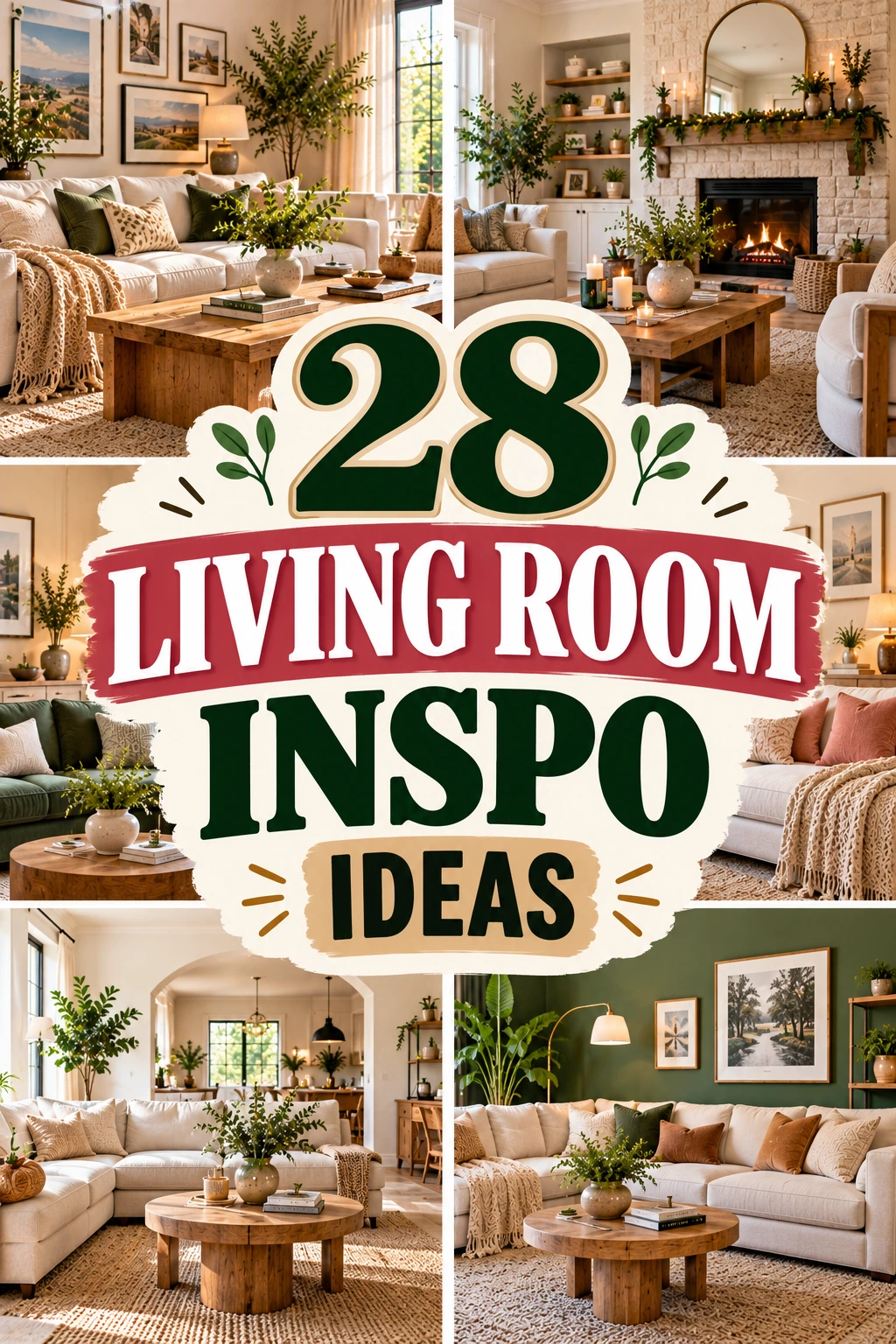
Your living room doesn’t need expensive furniture or a complete makeover to look amazing. Sometimes, a softer color palette, a better furniture arrangement, or a few cozy textures can make the whole space feel different. The trick is finding a style that looks beautiful but still feels like you.
These 28 living room inspo ideas cover everything from modern minimalist spaces and cozy neutral interiors to colorful accents, small living room layouts, and Pinterest-worthy decor. Whether you rent a tiny apartment or have a spacious family room, you’ll find plenty of inspiration to make your living room feel more inviting.
1. Create a Cozy Neutral Living Room
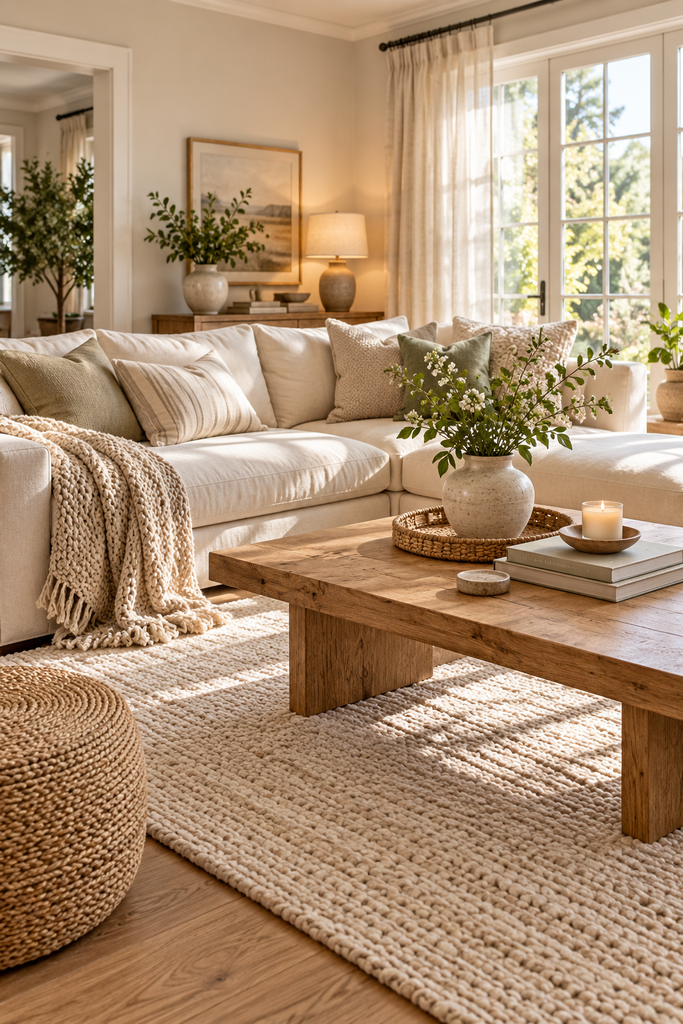
Neutral living rooms never really go out of style. Cream, beige, ivory, and warm gray create a peaceful atmosphere that feels comfortable without looking boring.
Start with a cream sofa, a natural wood coffee table, and a soft textured rug. Add linen curtains and a few cushions in slightly different shades to give the room more depth.
Styling tip: Mix different textures instead of relying on lots of colors. Knitted throws, boucle cushions, and woven baskets add interest while keeping the palette calm.
2. Try a Modern Minimalist Living Room
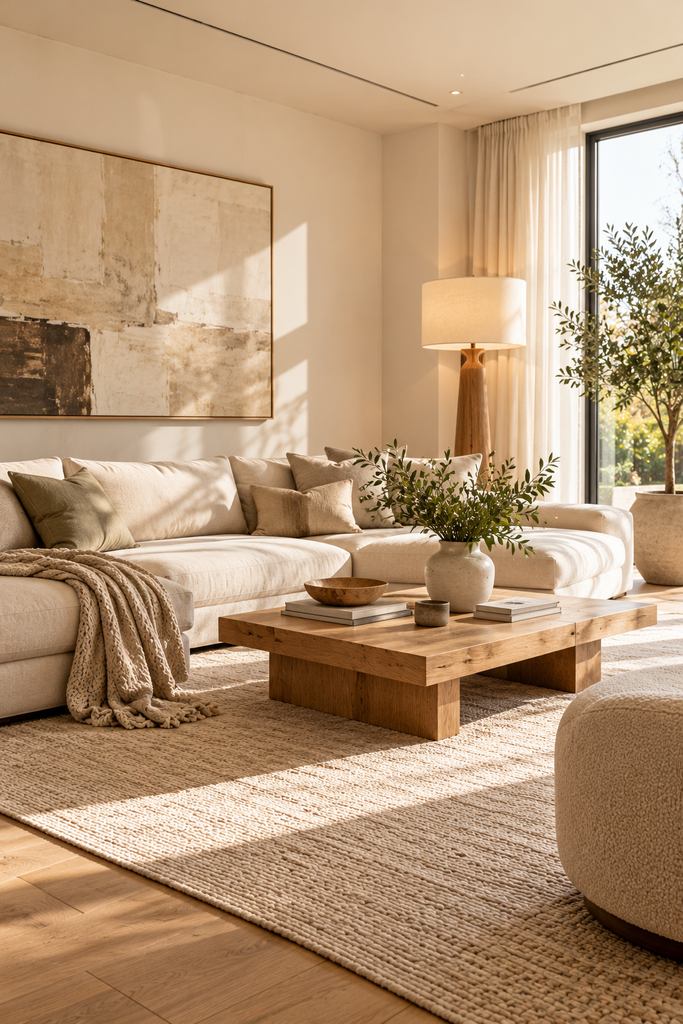
Love clean spaces without unnecessary clutter? A minimalist living room might suit you perfectly.
Choose a streamlined sofa, a simple coffee table, and a few carefully selected decorative pieces. Keep the surfaces relatively clear and give every item a purpose.
IMO, the secret to successful minimalism involves comfort as much as simplicity. A room with nothing but a sofa and a bare wall can feel unfinished, so add warm lighting, natural materials, and one interesting piece of artwork.
3. Add Warm Wooden Furniture
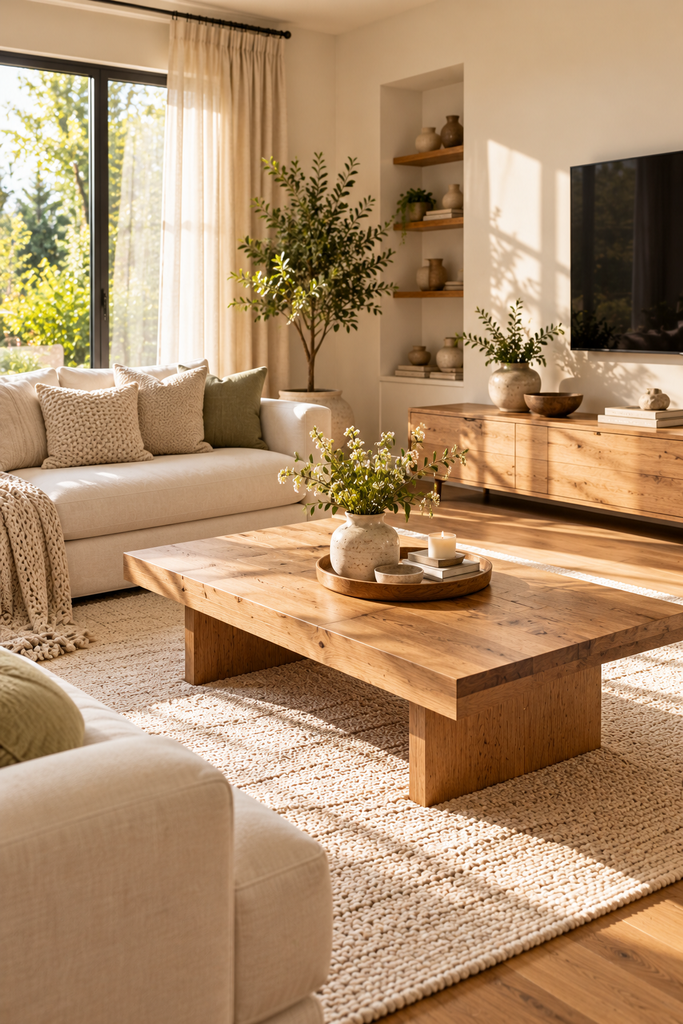
Wood instantly makes a living room feel more welcoming. Oak, walnut, and light natural wood all bring warmth that balances modern furniture and neutral walls.
Try a wooden coffee table, a media console, or floating shelves. If you already own wooden furniture, coordinate the finishes rather than buying an entirely new set.
Why it works: Wood adds natural variation and texture, helping a room feel less flat and more lived-in.
4. Design a Small Living Room That Feels Spacious
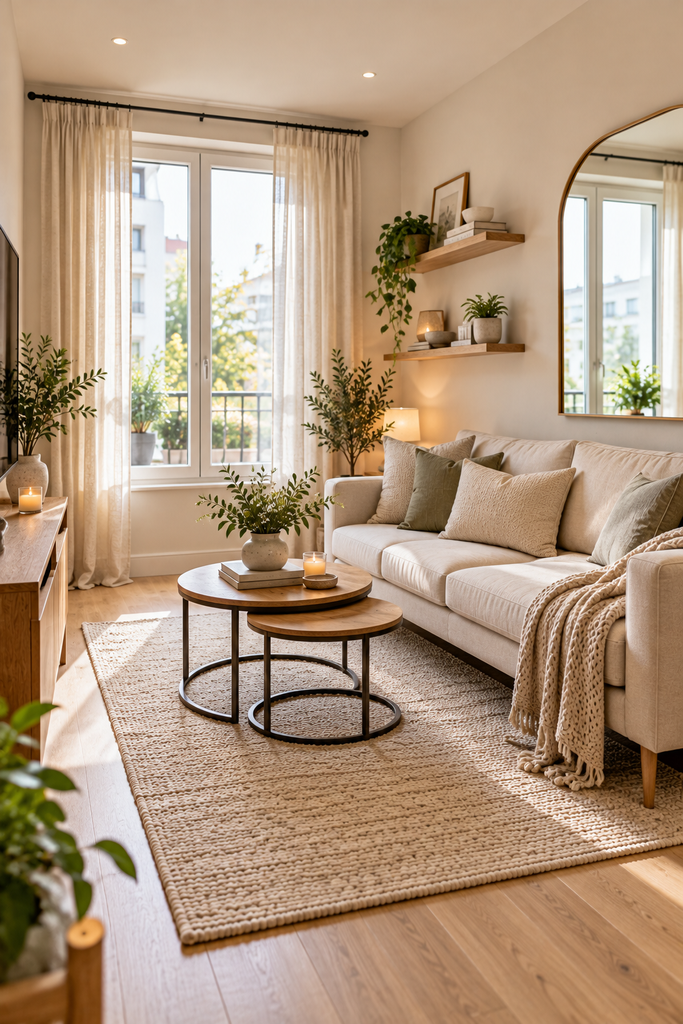
Small living rooms need thoughtful furniture choices, not a complete lack of personality.
Choose a compact sofa with raised legs, a slim coffee table, and wall-mounted shelves. These pieces leave more visible floor space, which can help the room feel larger.
Use mirrors to reflect natural light, and avoid blocking windows with bulky furniture. FYI, a giant sectional might look fantastic online, but it can quickly overwhelm a small apartment.
5. Make a Statement With a Curved Sofa
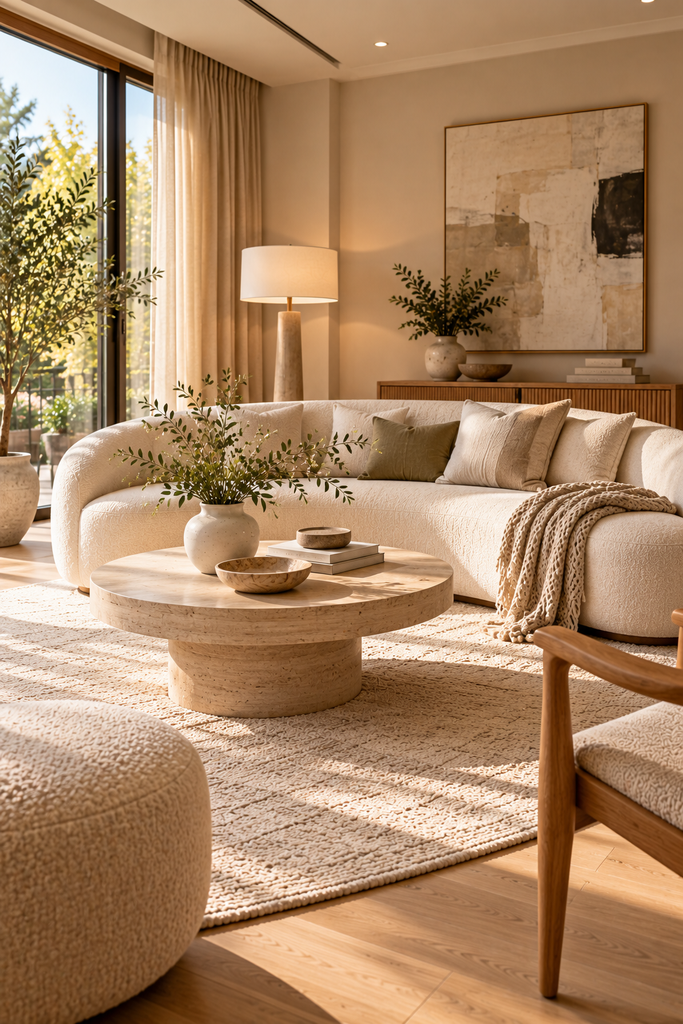
Curved sofas add softness and a contemporary feel to living rooms. Their rounded silhouettes contrast beautifully with rectangular coffee tables, straight shelving, and simple architectural lines.
Pair a curved cream sofa with a round coffee table and a sculptural floor lamp. Keep the surrounding furniture relatively simple so the sofa remains the main attraction.
This idea works particularly well in open-plan homes where the sofa can help define a seating area without creating a hard visual boundary.
6. Bring Nature Indoors With Green Plants
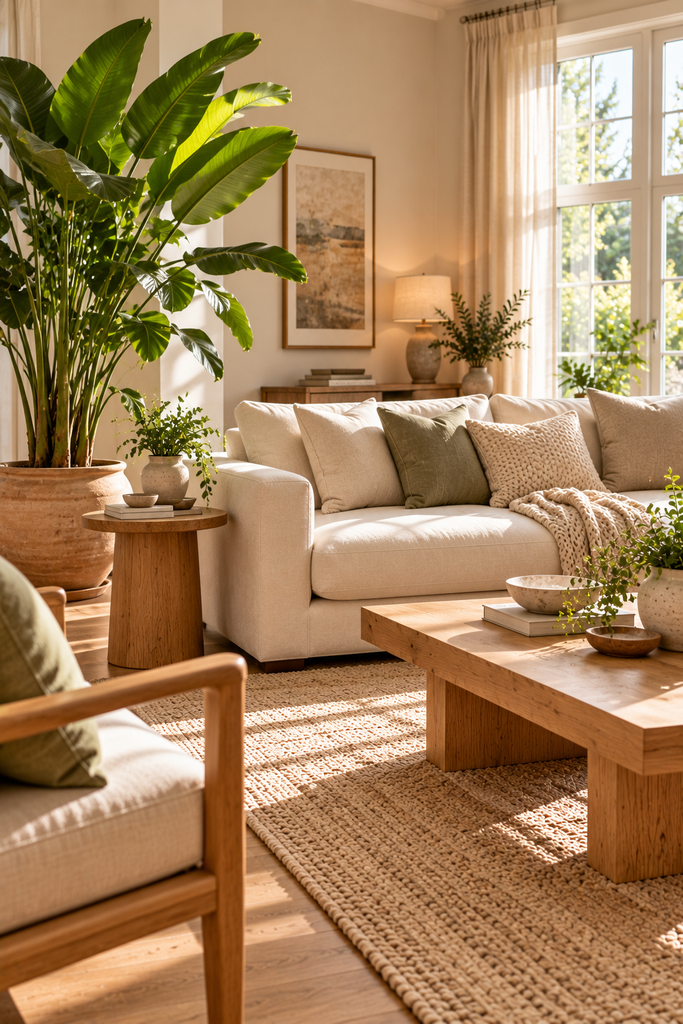
Plants add color, texture, and life to almost any living room. Even one well-placed plant can make a neutral interior feel fresher.
Try a tall indoor plant beside the sofa, smaller plants on floating shelves, or a leafy arrangement near a bright window. Choose varieties that suit your available light and your willingness to care for them.
If you prefer low-maintenance decor, consider snake plants or ZZ plants. Always check your pets’ safety before bringing a new plant home.
7. Decorate With Oversized Wall Art
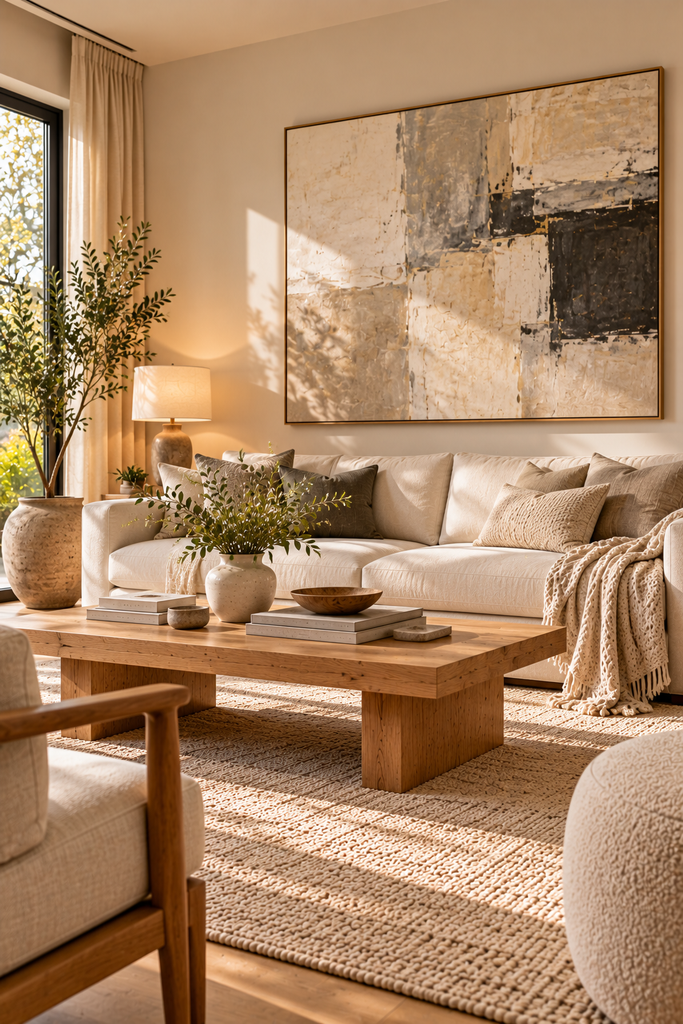
A large piece of artwork can transform a plain living room wall without requiring a complicated gallery arrangement.
Choose abstract art, a landscape, or a large photographic print that complements your furniture. For a cohesive look, repeat one or two colors from the artwork in your cushions or rug.
A useful rule: Position the artwork at a comfortable viewing height and scale it to the furniture beneath it. Tiny artwork above a large sofa can look a little lost.
8. Create a Beautiful Gallery Wall
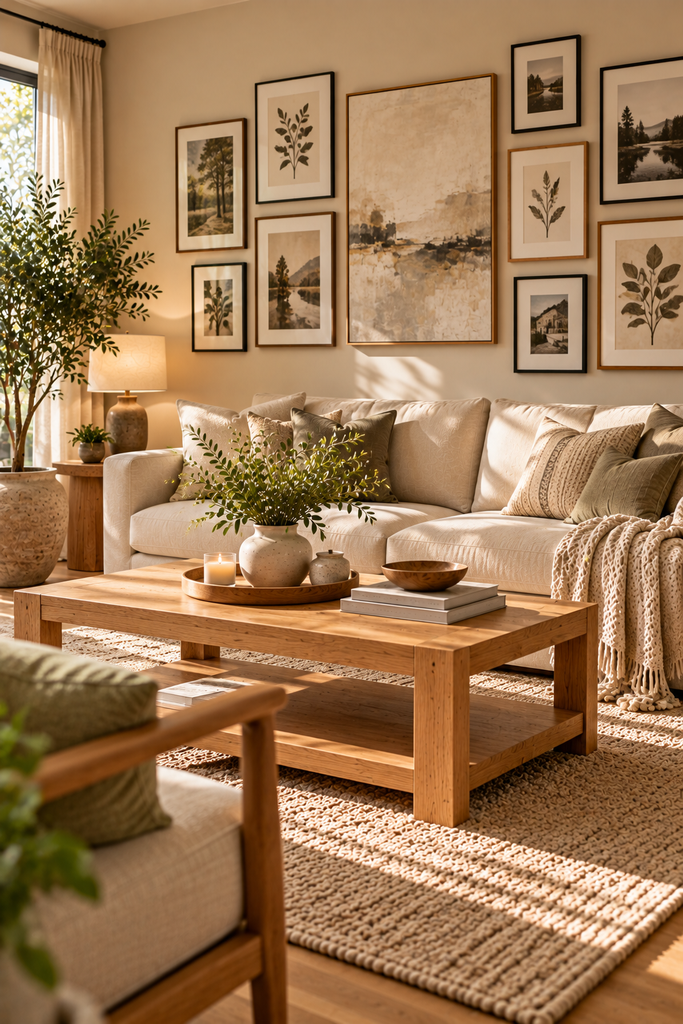
A gallery wall lets you show off your personality through prints, photographs, illustrations, and meaningful objects.
Combine different frame sizes while keeping one element consistent, such as the frame color or overall palette. Arrange the pieces on the floor before hanging them so you can experiment with spacing.
For a relaxed look, mix personal photographs with abstract prints. For a more polished result, use matching frames and align the edges carefully.
9. Use Soft, Layered Lighting
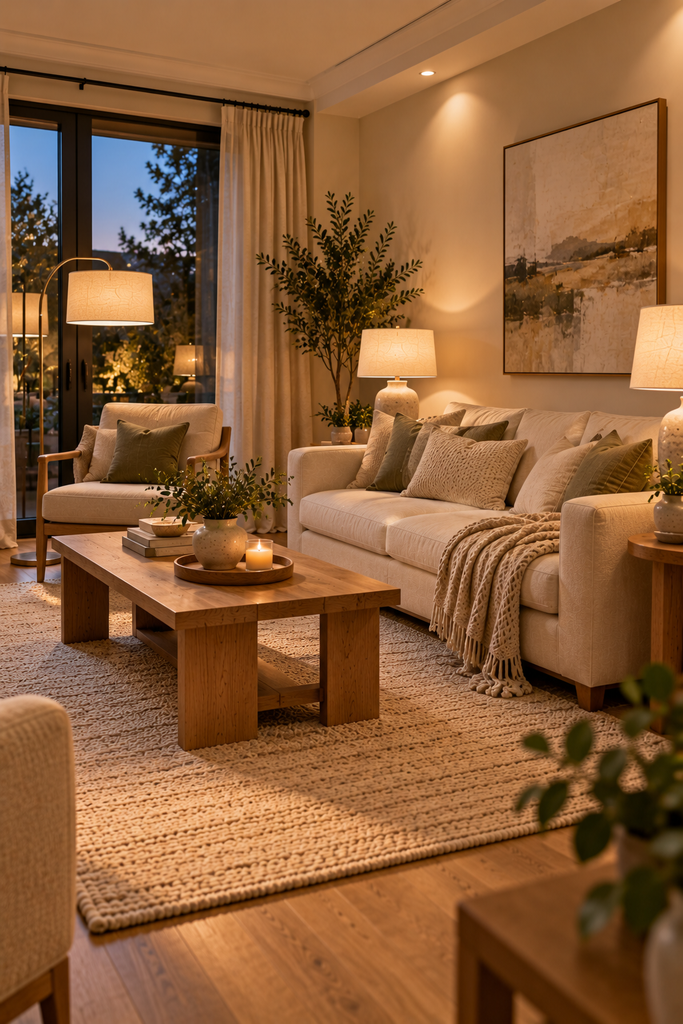
Lighting can completely change how a living room feels. Bright overhead lights work for cleaning and practical tasks, but they rarely create the cozy atmosphere you want for a relaxing evening.
Combine three types of lighting:
- Ambient lighting: Ceiling fixtures or general room lighting.
- Task lighting: Reading lamps beside chairs or sofas.
- Accent lighting: Table lamps, picture lights, and subtle decorative lights.
Choose warm-white bulbs for a relaxed atmosphere. Multiple light sources also give you more control over the mood throughout the day.
10. Style a Beautiful Coffee Table
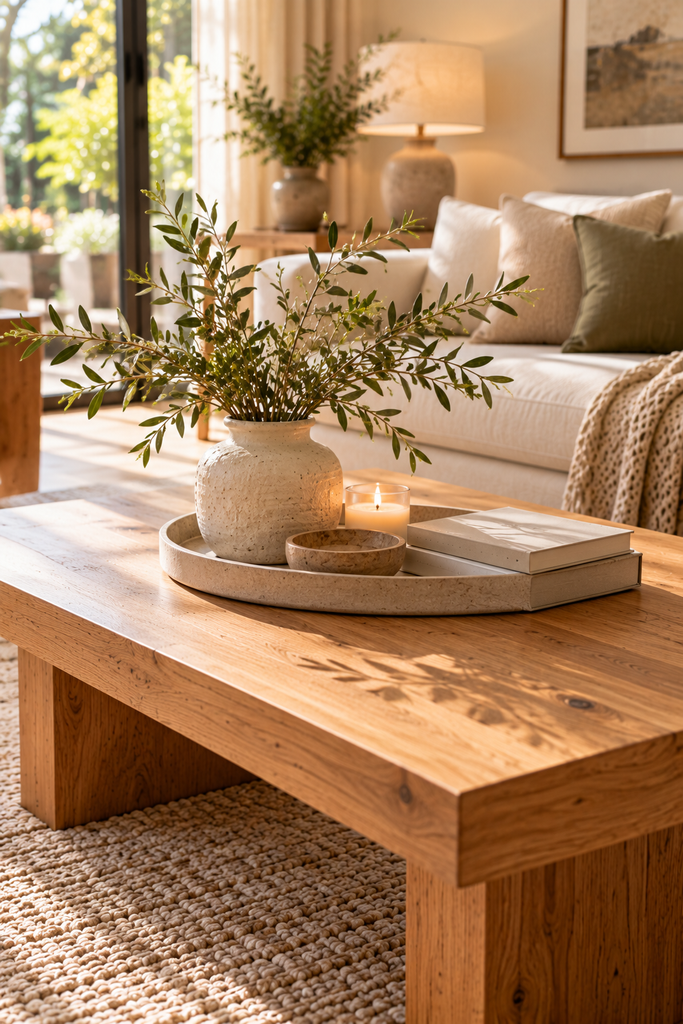
Your coffee table deserves more attention than a remote-control parking space.
Start with a tray, add a small vase, and include two or three favorite books. A candle or sculptural object can complete the arrangement without making the table difficult to use.
Vary the height of your accessories to create visual interest. Leave enough empty space for drinks, snacks, and everyday activities because a beautiful living room should still function like a real home.
11. Embrace Earthy Living Room Colors
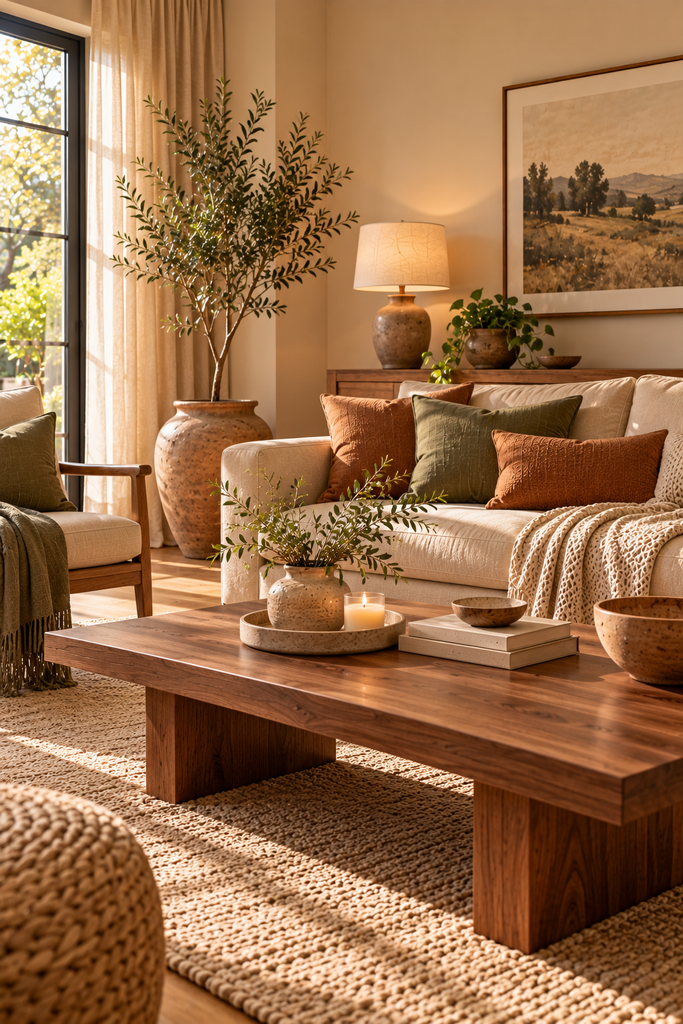
Terracotta, olive green, warm brown, sand, and muted rust create an inviting, nature-inspired palette.
You can introduce these shades through cushions, ceramic vases, rugs, and artwork. If you want a bigger change, paint one wall in a warm earthy color.
Earthy colors work especially well with natural wood, linen, stone, and woven materials. They create a relaxed look without making the room feel overly decorated.
12. Add a Touch of Luxury With Velvet
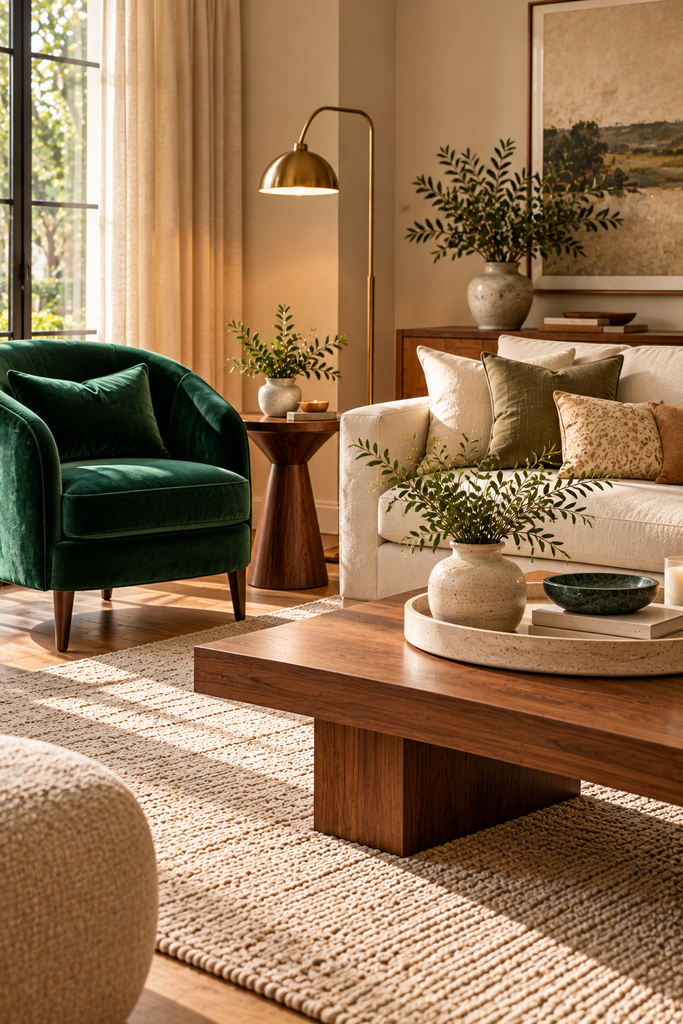
Velvet brings richness and texture to a living room, even when you use it in small amounts.
Try emerald green, dusty blue, burgundy, or caramel velvet cushions on a neutral sofa. If you want a stronger statement, choose a velvet accent chair.
Pair velvet with linen, wood, or matte metal to balance its luxurious appearance. Too many shiny surfaces and heavy fabrics can make a small room feel crowded, so keep the overall mix balanced.
13. Create a Scandinavian-Inspired Living Room
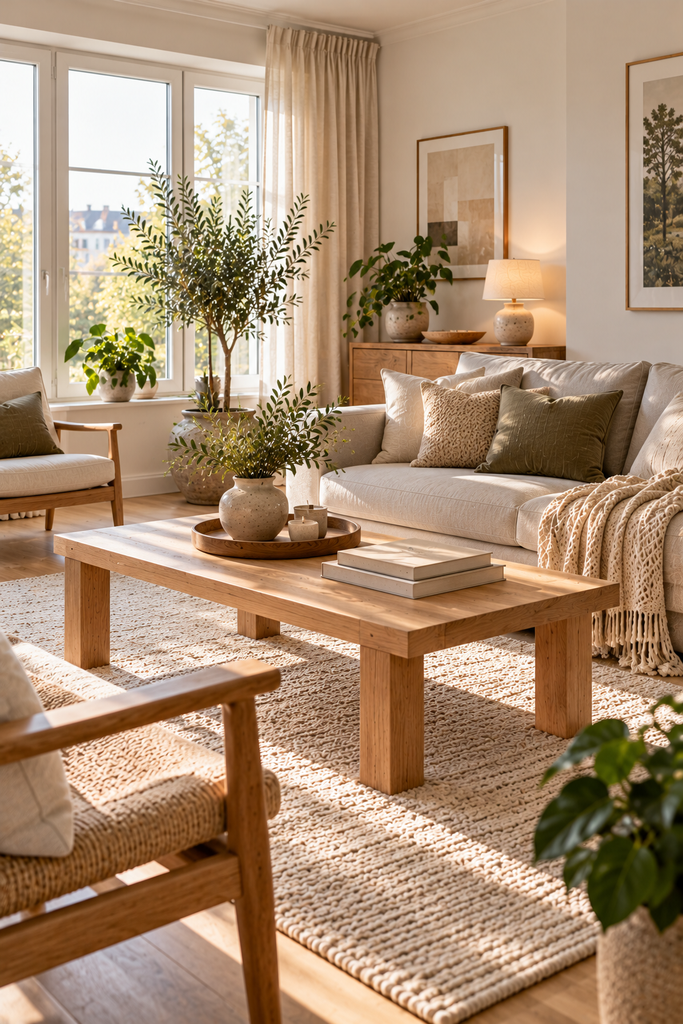
Scandinavian interiors combine simplicity, practical furniture, natural materials, and comfortable textures.
Choose light wood, a neutral sofa, a simple rug, and uncluttered shelving. Add soft throws, ceramic accessories, and a few plants to keep the space welcoming.
This style suits smaller homes because it emphasizes light and useful furniture. You don’t need to buy an entire matching furniture collection; a few thoughtful pieces can create the same feeling.
14. Try a Modern Black-and-White Living Room
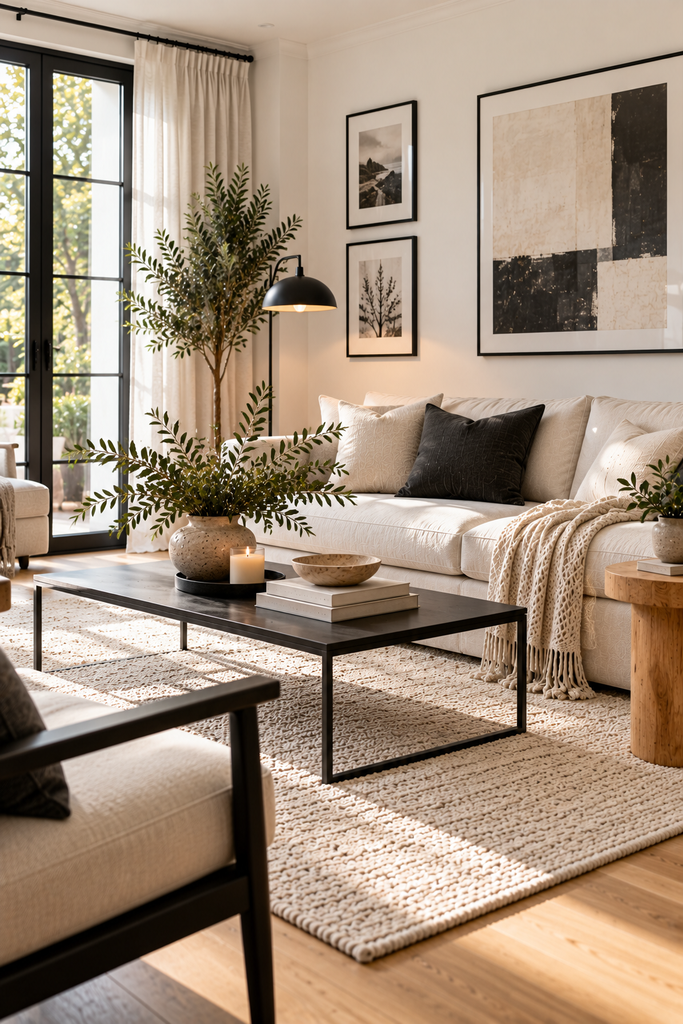
Black and white create a crisp, timeless combination that works with both minimalist and contemporary interiors.
Start with white or off-white walls, then introduce black through lighting, picture frames, furniture legs, or a coffee table. Add wood or soft beige fabrics if you want to prevent the contrast from feeling too stark.
For a balanced result, let one color dominate and use the other as an accent. Equal amounts of black and white can look striking, but the right proportions depend on your room’s natural light.
15. Bring in Boho Living Room Decor
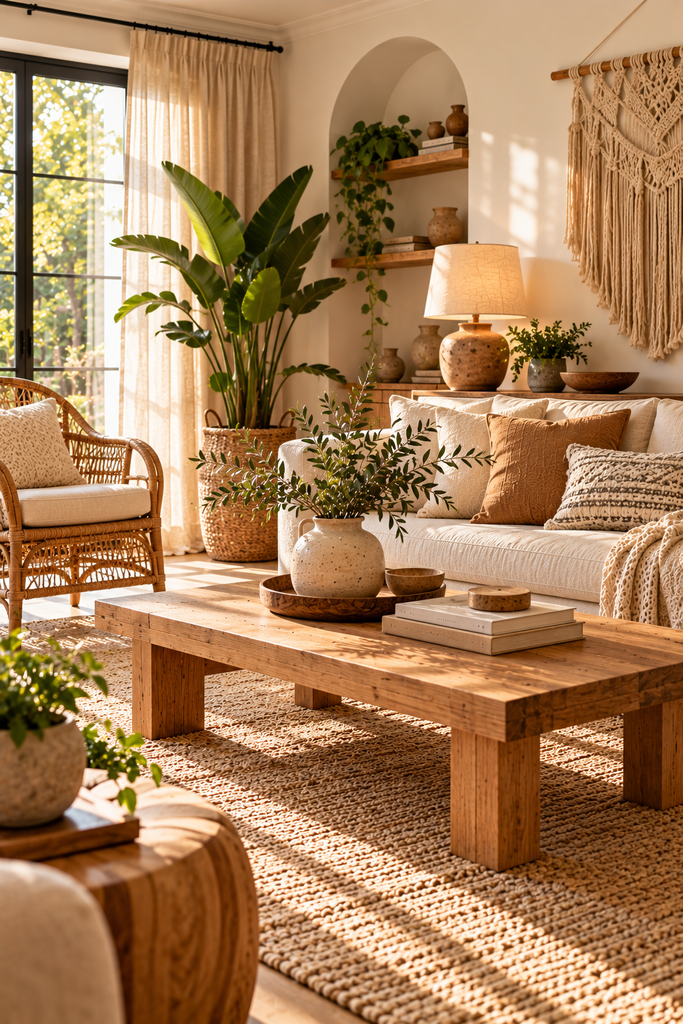
Boho living rooms celebrate layered textiles, handmade details, natural materials, and relaxed styling.
Mix a woven rug with textured cushions, wooden furniture, ceramic pots, and baskets. You can also add macramé wall decor or a floor cushion for a casual, collected look.
The key is combining different textures without filling every corner. A little visual breathing room helps your favorite pieces stand out.
16. Make a Fireplace the Focal Point
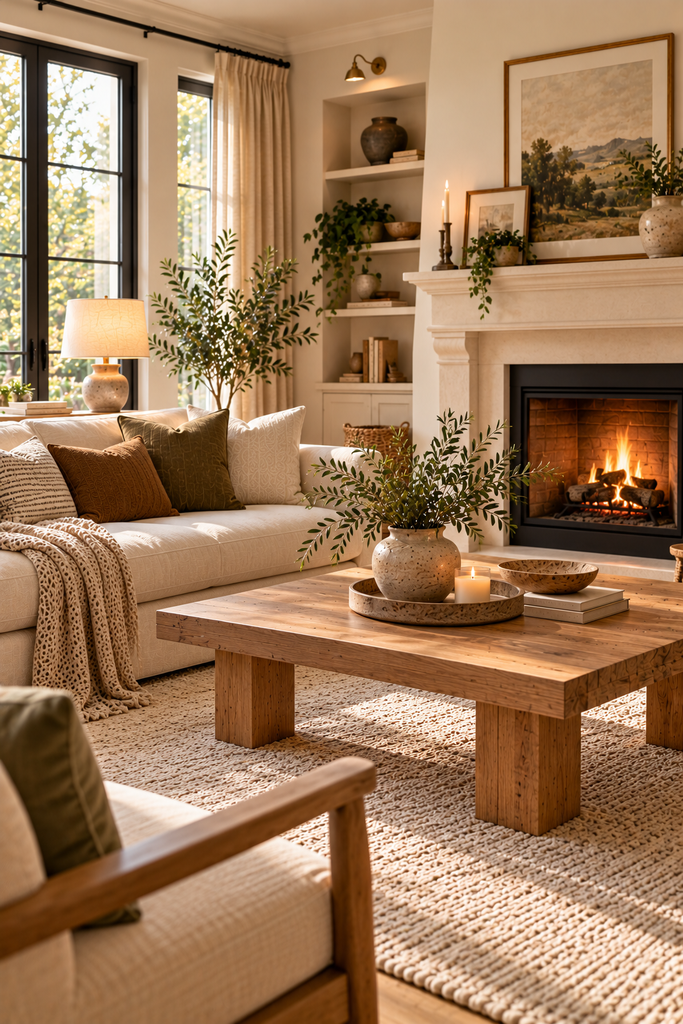
A fireplace naturally draws attention and gives a living room a comfortable gathering point.
Arrange your seating around it when the layout allows, and decorate the mantel with artwork, a mirror, or a restrained collection of objects. Keep the surrounding colors and materials coordinated with the rest of the room.
If you don’t have a working fireplace, you can create a similar focal point with a console, a large artwork, or an electric fireplace designed for your space.
17. Choose a Large, Comfortable Sectional Sofa
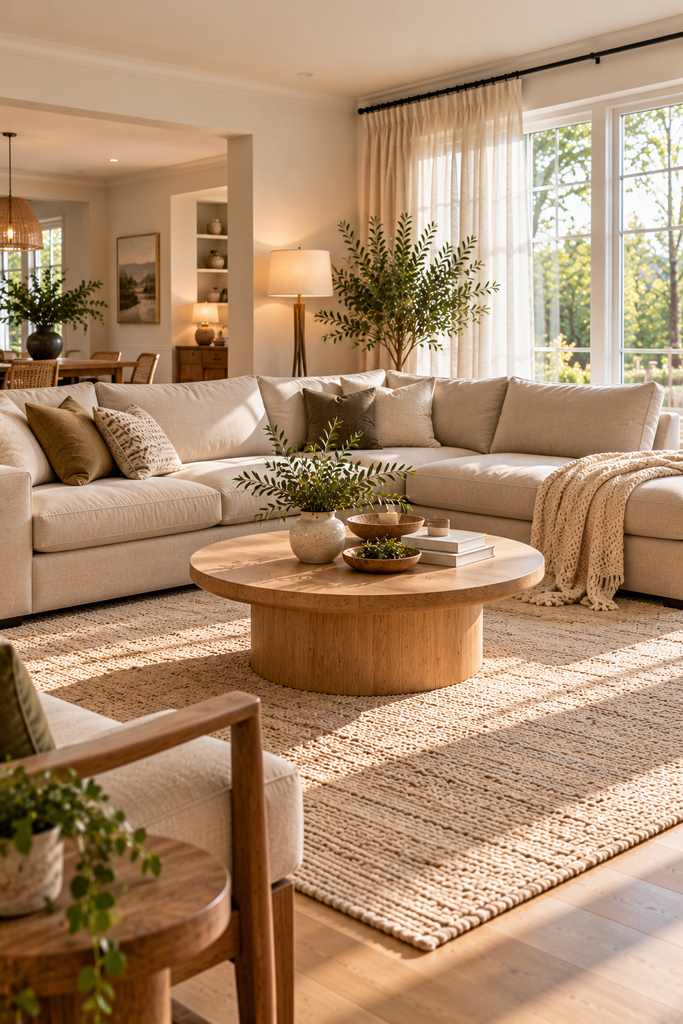
A sectional sofa works well for families, movie nights, and anyone who enjoys stretching out after a long day.
Measure the room before choosing one, and check that people can move comfortably around it. A chaise sectional suits many layouts, while a larger L-shaped sofa can define an open-plan seating area.
Choose durable upholstery if you have children or pets. Add a few contrasting cushions and a throw to soften the look without sacrificing everyday comfort.
18. Use Mirrors to Brighten the Room
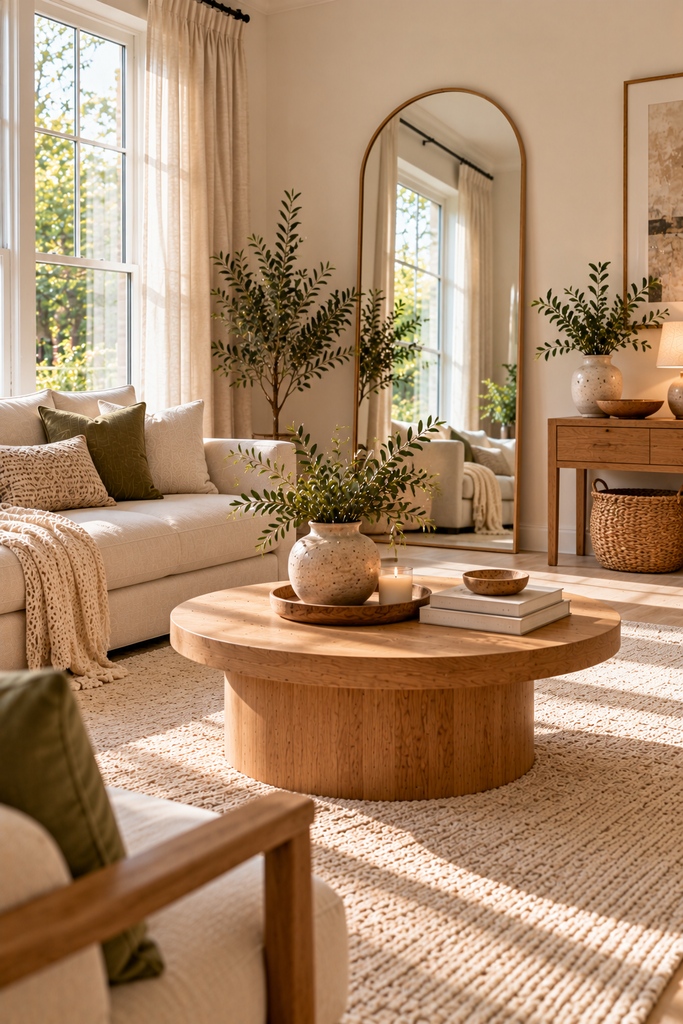
Mirrors reflect light and create a sense of visual depth, making them particularly useful in small or dim living rooms.
Hang a large mirror opposite or near a window when the arrangement allows. An arched mirror adds softness, while a simple rectangular mirror suits a more contemporary interior.
Pay attention to what the mirror reflects. Position it to capture a window, attractive artwork, or a pleasant view rather than a cluttered corner.
19. Add Color With Accent Cushions
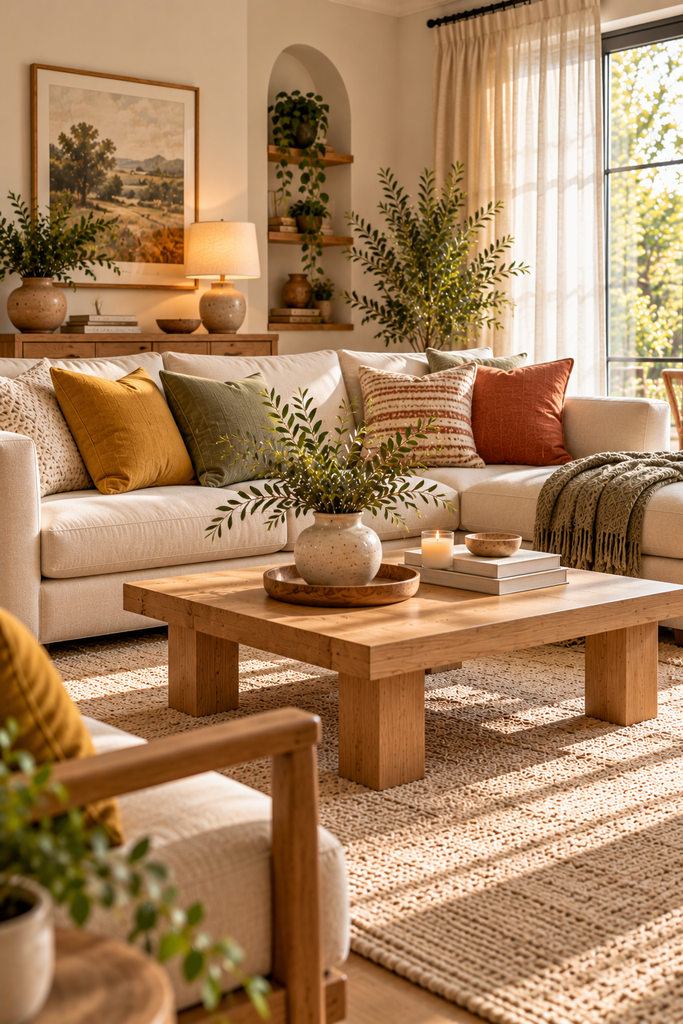
Accent cushions offer one of the easiest ways to refresh your living room without replacing major furniture.
Try pairing mustard yellow with gray, rust with cream, or sage green with beige. Combine solid colors with one or two patterned cushions to create a coordinated but relaxed arrangement.
You can switch cushion covers seasonally, too. Lighter fabrics work nicely for spring and summer, while richer colors and chunky textures feel inviting during colder months.
20. Design a Cozy Reading Corner
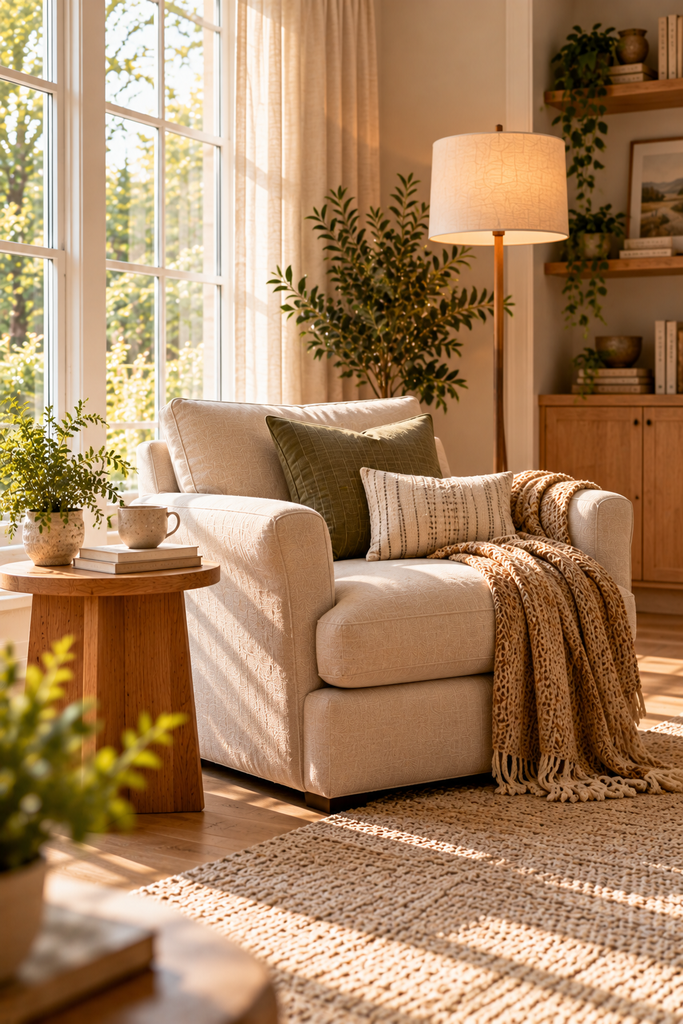
A reading corner gives your living room a quiet little escape without needing a separate room.
Place a comfortable armchair beside a window, add a floor lamp, and keep a small side table within reach. A soft throw and a nearby bookshelf make the corner even more inviting.
Choose a chair that supports your back and gives you enough room to settle in. Decorative furniture looks lovely, but comfort matters more when you plan to spend an hour reading there.
21. Try a Japandi Living Room
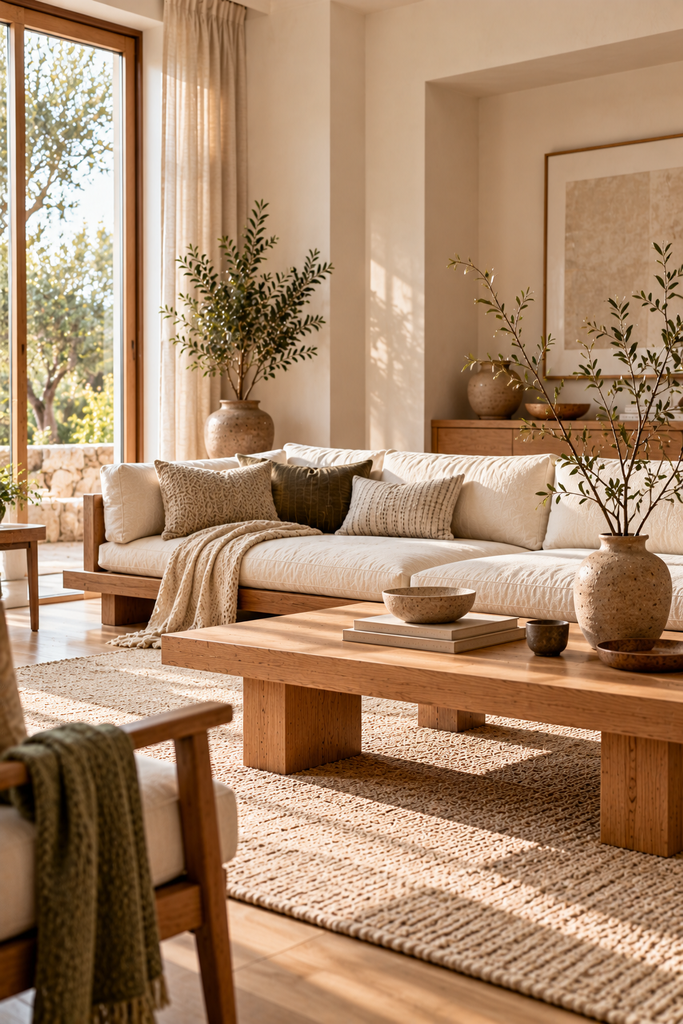
Japandi style blends Japanese-inspired simplicity with Scandinavian warmth. It emphasizes natural materials, clean lines, thoughtful proportions, and calm colors.
Choose low-profile furniture, pale or medium-toned wood, neutral upholstery, and a few handmade accessories. A simple ceramic vase or sculptural branch can provide enough decoration without creating clutter.
This style works best when every object has a reason to occupy the space. Instead of filling empty corners, let the furniture and materials do the visual work.
22. Make a Bold Accent Wall
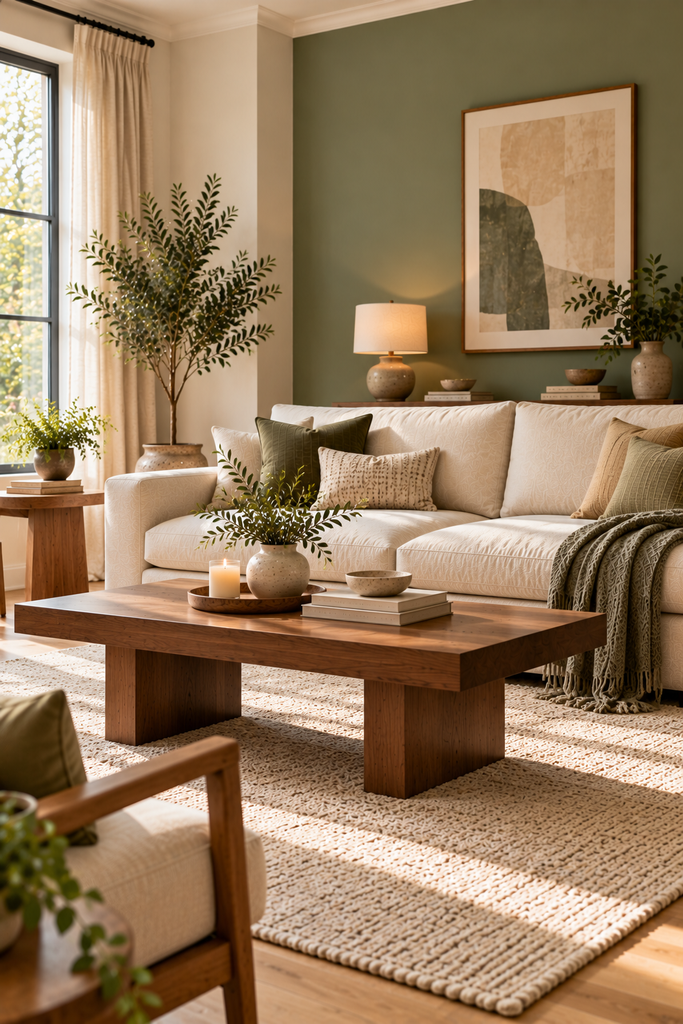
An accent wall adds personality without requiring you to repaint the entire room.
Consider deep green, muted blue, terracotta, or warm charcoal. You can also use patterned wallpaper or wood slats if you prefer more texture.
Choose a wall that naturally attracts attention, such as the one behind your sofa. Before committing to a paint color, test a sample at different times of day because natural and artificial lighting can change how it looks.
23. Decorate With Natural Linen Curtains
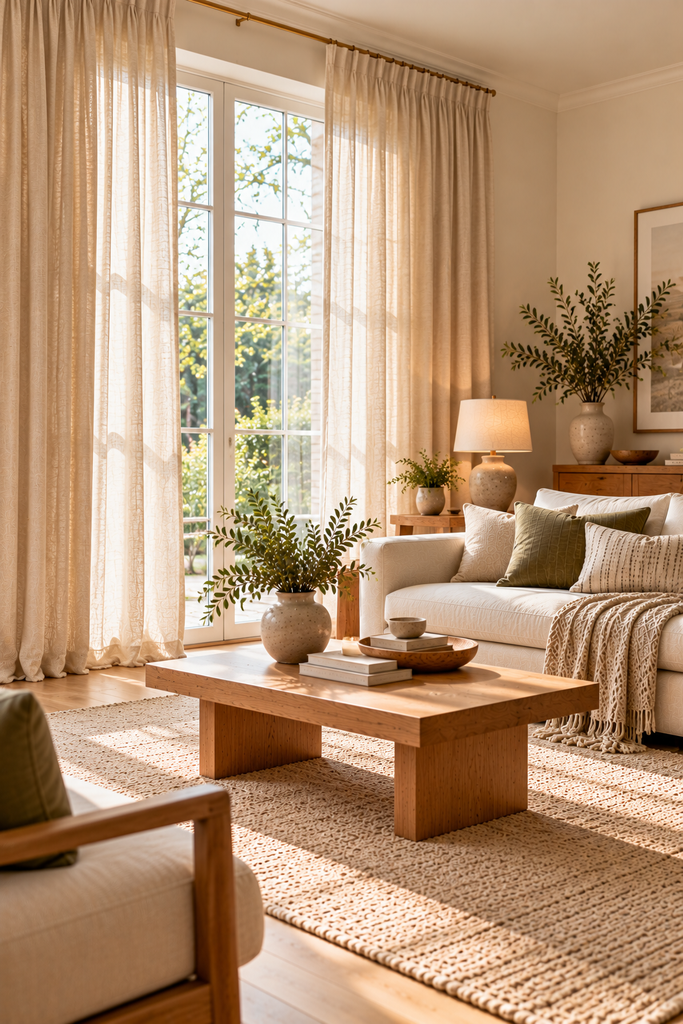
Curtains soften a room, frame the windows, and help connect the different elements of your decor.
Linen and linen-look fabrics create a relaxed appearance, while heavier curtains add structure and privacy. Choose a shade that complements your walls and sofa rather than matching every item exactly.
For a taller-looking room, hang the curtain rod above the window frame and allow the panels to reach close to the floor. This simple adjustment can make the whole space feel more polished.
24. Create a Modern Farmhouse Living Room
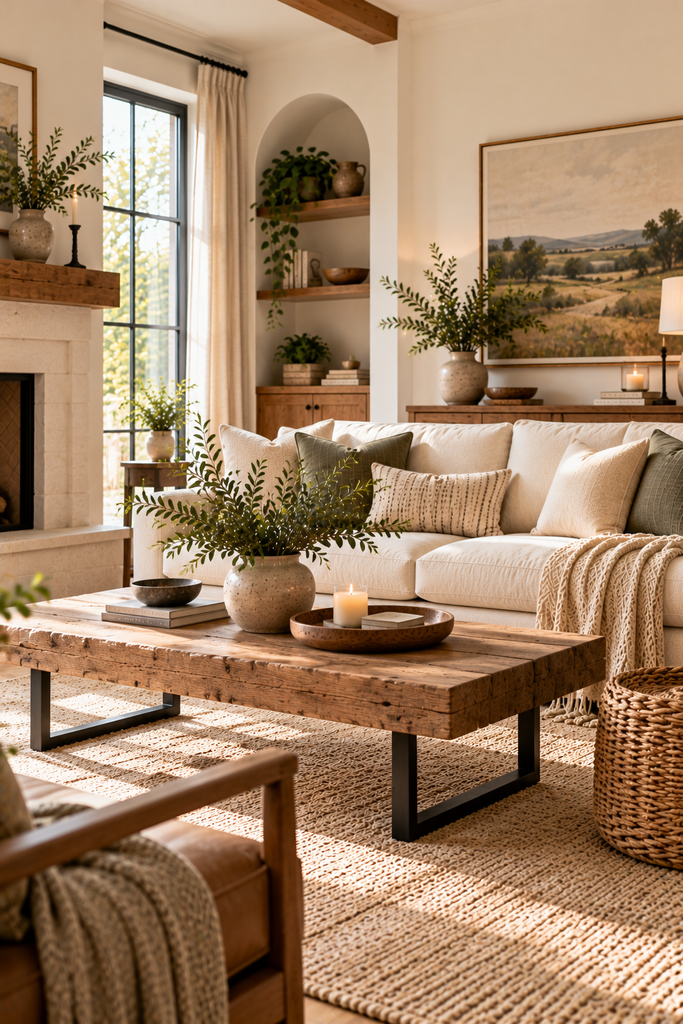
Modern farmhouse style combines rustic warmth with clean, contemporary details.
Try a neutral sofa, a substantial wooden coffee table, black metal accents, and textured cushions. Add a woven basket or a simple ceramic vase for an understated finishing touch.
You don’t need to cover every surface with distressed wood or farmhouse signs. A restrained mix of rustic and modern elements usually feels fresher and more versatile.
25. Use Floating Shelves for Stylish Storage
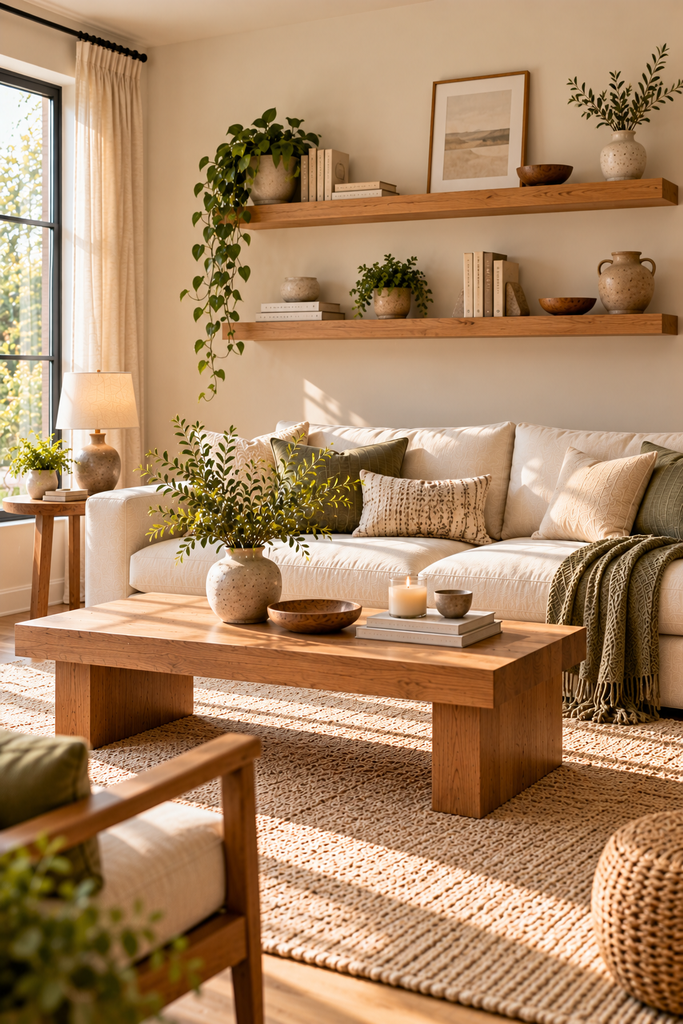
Floating shelves provide storage and display space without taking up valuable floor area.
Arrange books, framed photographs, small plants, and decorative objects in a balanced composition. Leave some gaps between items so the shelves don’t look overcrowded.
Install the shelves securely with hardware suited to your wall type and the expected load. If you have children or pets, keep fragile objects out of reach and prioritize safe installation.
26. Add Texture With a Statement Rug
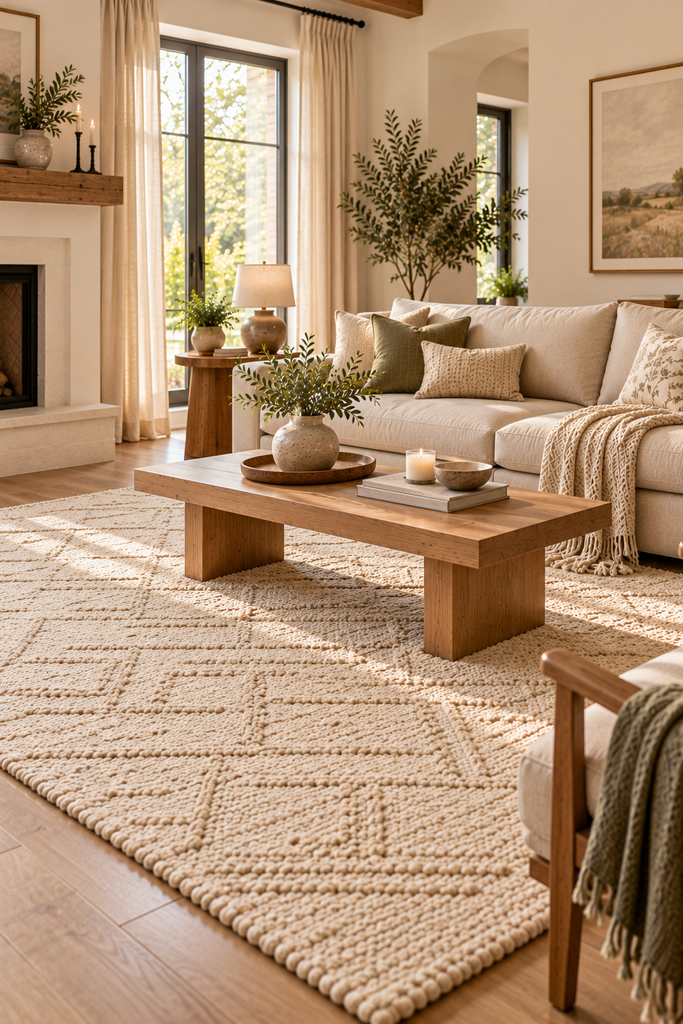
A rug helps anchor the seating arrangement and introduces color, pattern, or softness underfoot.
Choose a size that allows the front legs of your sofa and chairs to sit on the rug whenever possible. This approach visually connects the furniture and makes the seating area feel more cohesive.
For a calm interior, try a textured neutral rug. If your furniture feels plain, a geometric or vintage-inspired pattern can provide the contrast the room needs.
27. Style an Open-Plan Living Room
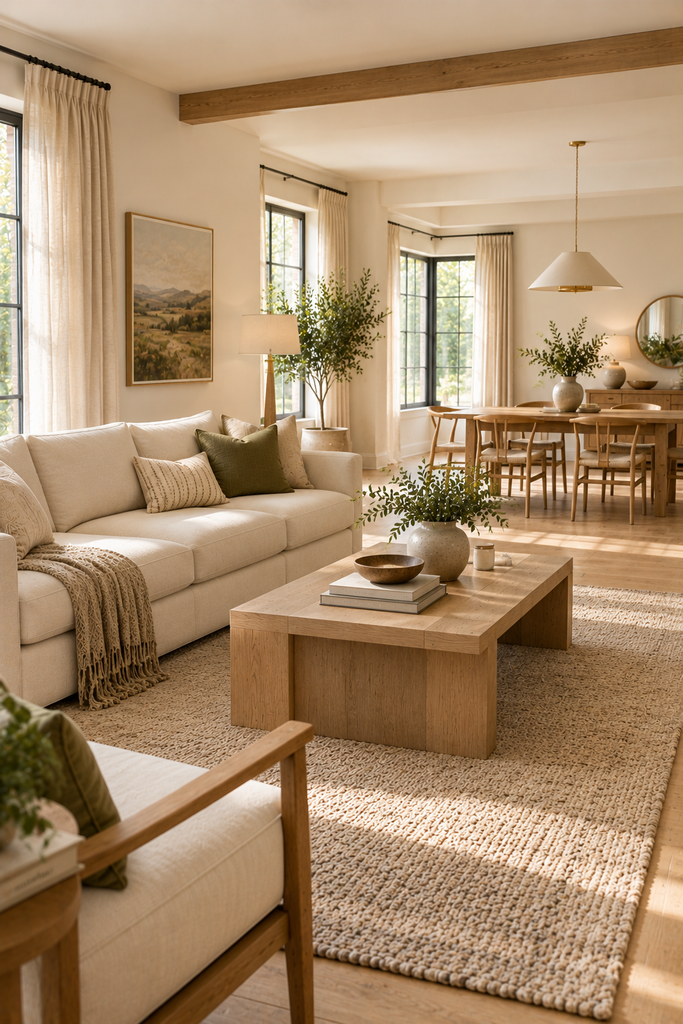
Open-plan spaces need clear zones so the living area feels connected without blending into the dining or kitchen area.
Use a sofa to define the seating zone, a rug to anchor it, and lighting to distinguish different activities. Keep the color palette consistent across the connected spaces to maintain visual flow.
You can also use a console table behind the sofa or a low bookcase to create a subtle boundary. These pieces help organize the room without blocking light or making the layout feel closed.
28. Personalize Your Living Room With Meaningful Decor
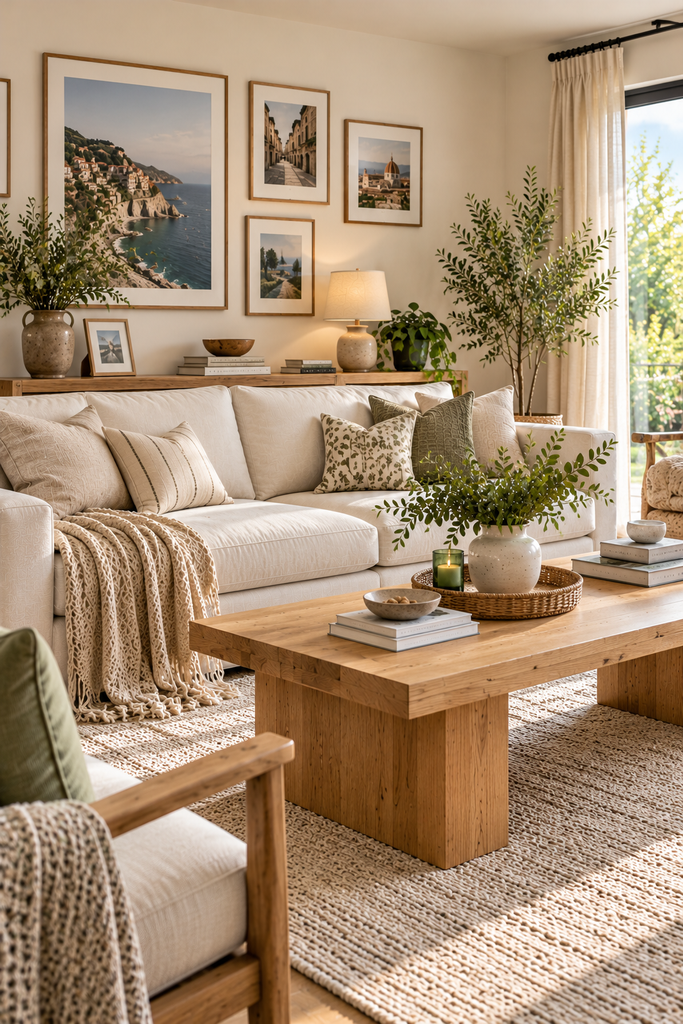
The most inviting living rooms reflect the people who live in them. A beautiful room should feel personal, not like a showroom where nobody dares to sit down.
Display travel photographs, favorite books, handmade pottery, family keepsakes, or artwork from local artists. Mix new purchases with pieces you already own to create a space that develops naturally over time.
Choose items that mean something to you instead of buying every trending accessory. Trends come and go, but the objects you genuinely love can give your home lasting character.
How to Choose the Best Living Room Inspo Ideas for Your Home
With 28 ideas to choose from, you might feel tempted to combine everything at once. Resist that urge! A clear direction will help your living room look intentional rather than crowded.
Start with these simple steps:
- Identify your preferred style. Choose two or three inspiration images that share a similar color palette or mood.
- Work with your existing furniture. Keep the pieces you love and identify what actually needs an update.
- Choose a base color palette. Start with a neutral foundation, then introduce one or two accent colors.
- Improve the lighting. Add table lamps or floor lamps before spending money on decorative accessories.
- Layer textures. Combine wood, fabric, ceramics, and natural fibers for visual interest.
- Keep the layout practical. Leave comfortable walking paths and make sure people can use the furniture easily.
- Decorate gradually. Live with your choices before adding more accessories.
Remember to consider your lifestyle, too. A household with children or pets may need washable fabrics and sturdy furniture, while a small apartment may benefit from compact seating and multifunctional storage.
Final Thoughts on These 28 Living Room Inspo Ideas
Creating a beautiful living room doesn’t require a huge budget or a complete renovation. Small changes, such as better lighting, coordinated colors, layered textures, and thoughtful furniture placement, can make a noticeable difference.
Whether you love cozy neutral interiors, modern minimalist furniture, earthy colors, or bold accent walls, choose ideas that suit your home and your everyday routine.
My favorite approach is to start with comfort, build a cohesive color palette, and add personality through texture and meaningful decor. Your living room should look good in photographs, of course, but it should feel even better when you spend time there.
Which of these 28 living room inspo ideas would you try first? Pick one change, give it a go, and let your space evolve from there. 🙂